
Ragdoll Boxing Combos: How to Keep a Multi-Punch Run Going in 1v1
What combos look like in a Ragdoll Boxing 1v1, plus the stamina-and-guard routine players use to keep multi-punch runs going instead of throwing single punches.
Quick answer
In a Ragdoll Boxing 1v1, a combo is a sustained run of punches — head shots, body shots and jabs thrown one after another until the opponent goes down. What turns single punches into a run is the routine around them: get your stamina back to normal, put your guard up, punch continuously while it lasts, then step back, block and regain stamina before starting the next run.
- Open every burst with stamina back at normal and your guard up.
- Mix head and body shots, and keep punching while the run lasts.
- Step back, block and regain stamina between runs.
- A tired opponent is a good time to attack; once they are nearly out, keep going for the head.
The footage behind this guide is creator commentary over recorded 1v1 matches against real players — a player's own mid-fight calls, not developer-stated combo rules. It never names a specific input for any punch. What the creator calls 'comboing' shows up as a rhythm instead: a burst of punches, a recovery pause, a guard check, another burst. That rhythm is the repeatable part, and the rest of this guide breaks it down.
What a combo run looks like
In one recorded 1v1 against a real player, the creator repeatedly 'comboed the heck out of' his opponent, landing punches to the head and body, and describes taking the round by TKO to go up 1-0. The run was not one unbroken flurry of swings: mid-fight he paused to 'regain our stamina real quick' and 'get our energy back up', and he kept repeating 'It's really important that we do block'. A combo in Ragdoll Boxing is that whole pattern — pressure, then recovery — not just the punching part.
Short strings count too. Later in that match, after two earlier knockouts, he finished it with what he called 'a little body shot to a face shot' — 'What a combo we just did' — and reported $192 for the match. Two linked punches, body then head, were enough to end the fight.
Longer head runs appear as well. In another stretch of the footage, a knockout came after 'we just kept hitting his head'. He then landed a 'good combo to the head', and with the opponent already knocked down once and reportedly sitting at 1 HP, his plan was simply to 'keep going for his head' — mixing in jabs he described as 'crazy' while getting his stamina 'back up to 100' and blocking. When an opponent is nearly out, a run does not stop; that is exactly when it continues.
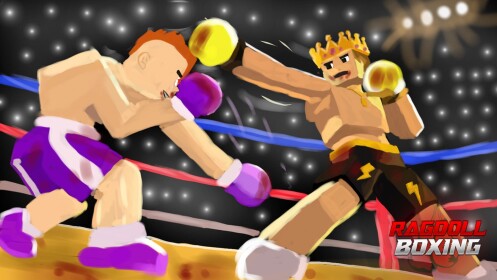
The routine that keeps a run going
The creator states his pre-burst sequence plainly — 'Our stamina is back to normal', 'make sure my guard's up', then 'we're comboing the heck out of him' — and the recovery half of it repeats across the recorded bouts:
- Recover first. Start a run only once your stamina is back to normal. He checks this before bursting and even tops his stamina 'back up to 100' mid-fight.
- Guard up. 'Make sure my guard's up' comes immediately before the punching starts.
- Punch continuously. While the run lasts, he throws punch after punch to the head and body, jabs included.
- Step back, block and regain stamina between runs. After exchanges where the opponent has already landed hits, he repeatedly pauses — 'We've got to regain our stamina real quick', 'Let's get my stamina back up real quick' — before punching again.
Treating recovery as part of the combo, rather than an interruption of it, is what turns single punches into runs. Blocking sits in the same category: the creator calls it 'really important' while a fight is ongoing, and it is what protects you between your own bursts. The punches page breaks down the individual punches, and the matches guide covers the rest of a bout around them.
Choosing the moment to attack
One bout adds a timing habit — the creator's own tactic, not a stated game rule. When his opponent was out of stamina, he decided to wait until 'he runs out of stamina real quick to hit him', then attacked, called it 'a good time to attack', and walked back a little afterward. It is the same rhythm again: punch while the opponent cannot answer, recover while the pressure is off. If you are the one running dry, the recorded answer is the reverse — step back, block and regain before your next run.
Reading whether your run is working
The creator judges a fight by two on-screen cues, and both are his own interpretation of what the screen shows. The first is bleeding: an opponent 'bleeding more than I am' made him 'believe that we have the lead', and he calls an opponent bleeding 'normally a good sign'. The second is the right side of the screen, where seeing the opponent 'really low' let him treat the lead as his. If your combo run is landing, those are the cues moving in your direction.
Where combos fit in a match
These runs were recorded in 1v1 bouts against real players, and the matches guide covers that format from matchmaking to the final knockout. The match above earned the creator a reported $192, and the how to earn cash guide follows that money. For the wider loop around fighting and spending, the beginner guide is the starting point, and the how to win page rounds out the match-side picture.
Related Guides
Punch Types and Inputs
See the punch and attack types used in Ragdoll Boxing, plus the keyboard controls confirmed for blocking and weaving.
What Happens in a Bout
Follow a full Ragdoll Boxing bout from matchmaking and the opening bell through scored rounds, knockouts and match cash.
Beginner Guide: Your First Session
Plan your first session: free spin, AFK chamber cash, then block, weave and survive your first 1v1.