
Ragdoll Boxing Matches Guide: What Happens in a Bout
How a Ragdoll Boxing bout works from start to finish: matchmaking against real players, the opening bell, stamina and defense, scored rounds, KOs and TKOs, and cash for winning.
Quick answer
A Ragdoll Boxing bout pits you against a random real player, not an AI: once both fighters are in the ring, a bell starts the fight, the two of you trade punches across multiple scored rounds, rounds end on a KO or a TKO, and the fighter who keeps the lead round after round wins the game and pockets free cash.
- You are matched with a random real player, then the two of you face off in the ring.
- A bell starts the bout, and the fighters begin exchanging punches right away.
- Each round can be won and the score carries across the bout (1-0, then 1-1).
- Rounds finish with a knockout (KO) or a TKO; winning all your rounds wins the whole game.
- A win awards free cash - one win paid $192.
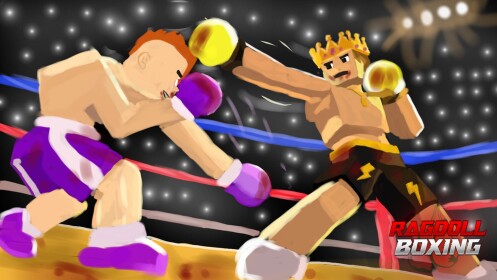
How a bout unfolds
- 1
Matched with a real player
You queue in against a random human opponent.
- 2
The bell rings
The bout gets underway immediately.
- 3
Fight round by round
Manage stamina, block, weave and land damage.
- 4
The bout is decided
KO, TKO, the round score or a leaving opponent.
From the matchup to the opening bell
When you jump into a match, matchmaking pairs you with a random real player, not an AI. Once the pairing is made, the two fighters face each other in the ring, a bell sounds, and the bout gets underway with both fighters immediately trading punches. In the bouts seen so far the action starts straight after the matchup, so be ready to fight the moment you are in the ring.
Because the opponent is another person, no two fights play out the same way. Opponents dodge incoming attacks and fight back on their own terms, so treat the opening seconds as a chance to read how they move rather than a scripted exchange.
Inside a round: stamina, defense and visible damage
While a round is live, three things decide how it goes.
Stamina comes first. Punching and moving drain your stamina and energy meter, and it refills when you step back out of the action. Fights show both sides of that rhythm: players step back to let their own stamina recover, then move in once the opponent's stamina is spent, because a fighter running on empty is the easiest one to press.
Defense is second. Blocking is bound to the space bar, and weaving left or right is E and Q - both listed in the controls shown on the right-hand side of the screen. Weaving slips incoming attacks outright, while blocking is the habit fights keep stressing as essential.
Damage is the third thread, and it shows physically. Fighters bleed as they take hits, and body and head condition can both sink low on either side - one bout had both fighters' body condition nearly gone at the same time. When an opponent's health is almost empty, keep working over their head: continuing to land head shots finished off an opponent whose health was nearly gone - the narrator called it 1 HP.
A referee also stands in the ring during the bout, close enough to the action that fighters sometimes walk straight into him.
The defensive half of a bout is those two inputs used well. On the attacking side, the Ragdoll Boxing punches guide covers the hits themselves, and the Ragdoll Boxing combos guide covers the stamina-and-guard rhythm that strings them together.
Rounds, the score and the lead
A bout is fought across multiple rounds, and every round can be won on its own. The score carries between rounds: win one and you are up 1-0; trade rounds and you are level at 1-1 and pretty even. When a round ends, the fighters go straight on to the next one, and winning the bout means keeping the lead you have built across those rounds.
Bouts observed so far ran through round two and into round three, so expect a fight to demand sustained focus rather than one good exchange. Whoever kept winning rounds kept the lead - and kept the fight.
There is more on how the round system plays out in the Ragdoll Boxing rounds guide.
How a round ends, and how the bout ends
Rounds end decisively. A knockout ends a round, and so does a TKO - both were called out as such by the players landing them. The same works against you: get knocked out and the round goes to your opponent, as one player conceded after being knocked out himself.
Win your rounds and you win the whole game. One match was decided exactly that way - a TKO in the first round, then knockouts in the rounds that followed, and the game was over. For more on turning rounds into a win, the Ragdoll Boxing how to win guide breaks it down further.
A bout can also end early without a finishing blow at all. In one fight, the opposing player left the game mid-bout, and it still counted: the remaining player's win tally went up.
What winning pays
Wins pay free cash. One win handed over $192, and another recorded win also paid free cash, which is why fighting other people is held up as a fast way to earn cash in Ragdoll Boxing. If you want the full picture of building your balance, the Ragdoll Boxing how to earn cash guide covers the other routes, and the Ragdoll Boxing codes page keeps track of the latest working codes.
New to the game overall? The Ragdoll Boxing beginner guide covers the basics outside the ring.
Related Guides
How Bouts Are Split
Learn how Ragdoll Boxing splits 1v1 bouts into numbered rounds and how each knockout moves the fight forward.
How to Win a Fight
Win rounds by knockout, read the running score, and know when a tired opponent is the moment to push.
Punch Types and Inputs
See the punch and attack types used in Ragdoll Boxing, plus the keyboard controls confirmed for blocking and weaving.